
What if the most dangerous DeFi transaction is not the swap you remember signing, but an approval you barely noticed? That question changes how wallet security should be understood. A token approval is not merely a preliminary click before trading; it is a permission that can remain active after the trade, after the browser tab is closed, and sometimes long after the protocol has changed.
For US-based DeFi users installing a browser wallet, the useful comparison is not “which wallet is safest?” in the abstract. It is whether the user can distinguish a limited permission from an open-ended one, understand who may use it, and verify the transaction before authorizing it. Rabby’s focus on Ethereum and EVM networks, including its recent positioning for Chrome and Brave users, makes it relevant to that workflow. But no wallet interface can turn an inherently risky permission model into a risk-free one.
The core misconception: an approval is not a transfer
Most fungible tokens on Ethereum-compatible networks follow a common permission pattern. A holder can call an approval function that records an allowance: a particular spender contract may move up to a stated amount of that token from the holder’s address. A later contract call, such as a swap or deposit, can use that allowance without asking for a new wallet signature each time.
This creates an important distinction. Signing an approval does not usually move the tokens immediately. It changes the rules under which a contract may move them later. That is why a transaction can appear harmless while still expanding the account’s future exposure. The practical risk depends on the token, the approved spender, the allowance amount, the contract’s behavior, and whether the contract or its upgrade path is compromised.
The common myth is that “the wallet cannot be drained unless I sign a transfer.” In reality, an approved contract can often initiate the token transfer itself, subject to the allowance and the token’s implementation. A malicious or compromised spender does not necessarily need the user to return and approve a second transaction. The original permission may be enough.
Unlimited versus exact approvals: a real trade-off
DeFi interfaces frequently offer an unlimited or very large approval because it reduces friction. A user approves once and can interact with the protocol repeatedly. For active liquidity providers or traders, that convenience may be meaningful: fewer transactions, fewer confirmation prompts, and less waiting for an approval transaction to settle.
An exact approval takes the opposite approach. The user authorizes only the amount expected to be used, perhaps with a small operational buffer. This narrows the potential loss if the spender is later exploited. The cost is operational friction. A second transaction may be required when the allowance runs out, and that second transaction carries its own network fee and review burden.
Neither choice is universally correct. A small, isolated amount in a dedicated wallet may justify a different decision from a large long-term balance held in the same address. The sharper mental model is to treat allowance size as a position limit. An unlimited approval is not automatically a loss, but it can make the maximum plausible loss much larger than the amount involved in today’s trade.
There is also a technical boundary that users should not overlook: token contracts are not perfectly uniform. Some tokens behave unusually around approvals, and different standards or implementation choices can affect how allowances are changed. Wallet warnings and approval-management tools are useful risk-reduction layers, not mathematical proof that every contract interaction is safe.
Rabby compared with manual approval management
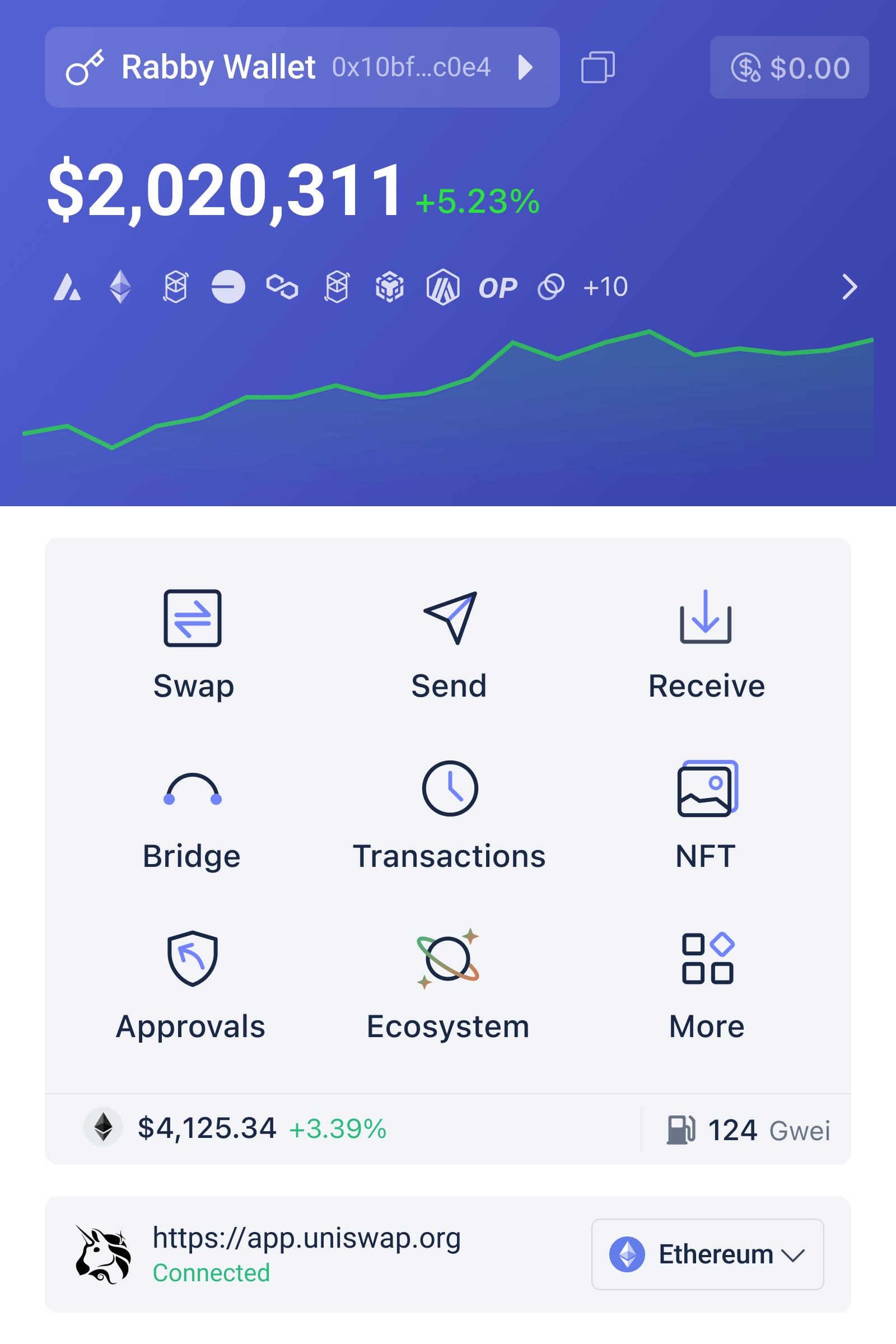
A browser wallet such as the rabby wallet extension sits at the point where a user reviews and signs a transaction. That position is valuable because the wallet can help put the request in context: which chain is being used, what type of action is being requested, and whether the transaction appears consistent with the intended DeFi interaction. For a user installing it in Chrome or Brave, the first security task is still basic but essential: obtain the extension from a source you have independently verified, then confirm the extension identity before importing or creating an account.
Manual management through a block explorer or a specialized approval dashboard offers a different advantage: separation from the moment of trade. It can reveal old allowances that are no longer needed, including permissions granted months earlier to protocols the user has forgotten. This is useful because wallet prompts are local and immediate; they do not necessarily provide a complete historical inventory of every active permission across every EVM network.
Rabby-style in-transaction review and manual approval audits therefore complement rather than replace each other. The wallet helps answer, “What am I about to sign?” An approval-management review asks, “What permissions are still active?” The first is prospective control. The second is retrospective control. Relying on only one leaves a gap.
There is a further comparison between approving directly to a protocol and using a token-permit mechanism, where supported. Permit-style systems can reduce the number of on-chain approval transactions, but fewer transactions do not necessarily mean fewer risks. A malicious signature request can still authorize a dangerous allowance, and off-chain signatures may be easier for users to underestimate because they do not immediately look like a blockchain transaction. Efficiency changes the surface; it does not remove the need to inspect the spender and amount.
A practical approval review for DeFi users
Before signing, identify four things: the network, the token, the spender, and the allowance. The spender is especially important. It may not be the website name shown in a prominent heading; it is the contract address receiving permission. If the address, chain, or token does not match the intended action, stop rather than treating a familiar brand as sufficient evidence.
Next, compare the allowance with the transaction’s purpose. A one-time swap for a modest amount does not obviously require permission for an entire token balance. An exact approval may be the more defensible choice when the protocol is new, the wallet holds substantial assets, or the user is experimenting. If the protocol is used frequently, the convenience of a larger allowance can be weighed against the value kept in that address.
After the transaction settles, record the permission mentally—or in a simple personal security log—and revisit it. Revoke allowances that are obsolete, but do not assume revocation is free or riskless. A revocation is another on-chain transaction, so the user must choose the correct network and confirm that the intended allowance is being changed. On some systems, changing an existing nonzero allowance may also require a specific sequence, depending on the token implementation.
The most reusable rule is separation of duties: use a low-balance activity wallet for unfamiliar applications, keep long-term holdings elsewhere, and do not treat a hardware signer or a polished wallet interface as a substitute for contract judgment. Hardware devices protect private-key use; they do not make a user-approved allowance economically harmless.
Where wallet security tools reach their limit
Transaction simulation, warnings, and readable prompts can reduce mistakes, but they are interpretation tools. They depend on what can be inferred from the transaction and on the quality of the underlying data. A contract may be technically valid yet economically dangerous. A legitimate protocol may be upgradeable. A familiar domain may be compromised. Conversely, a warning may reflect unusual behavior rather than a confirmed attack.
This is the uncomfortable part of DeFi security: authorization and trust are distributed. The wallet controls access to the key, the token contract defines allowance behavior, the spender contract executes the later transfer, and the user decides how much exposure is acceptable. No single interface owns the entire risk chain.
That boundary matters for Rabby and every competing wallet. A more informative confirmation screen can improve decisions, particularly for users moving across many EVM chains. It cannot verify that a protocol’s governance, oracle, upgrade administrator, front end, and economic incentives will remain sound. If an alert is absent, that means only that the tool did not identify a problem under its available checks—not that the transaction has been certified safe.
What to watch next
The likely direction of wallet design is more contextual authorization: clearer spender identity, better simulations, chain-aware warnings, and easier permission inventories. If these features become reliable and widely adopted, the practical difference between “signing a transaction” and “granting a standing capability” may become harder to miss. The key signal to watch is not how many security labels a wallet displays, but whether users can consistently understand and control permissions across multiple EVM networks.
That future remains conditional. Better interfaces can lower cognitive load, but they may also create overconfidence. The strongest security model will probably combine readable wallet review, periodic allowance audits, compartmentalized funds, and skepticism toward unfamiliar contracts. In DeFi, convenience is useful precisely when its cost is visible.
Frequently Asked Questions
Does revoking a token approval return funds that were already stolen?
No. Revocation changes a future permission; it does not reverse transfers already executed. If an allowance may have been abused, revoke it promptly and assess the affected wallet and protocol separately. Revocation is preventive, not a recovery mechanism.
Should every DeFi user always choose an exact approval?
Not necessarily. Exact approvals reduce the amount a spender could potentially access, but they add transactions, fees, and friction. They are often attractive for unfamiliar protocols, high-value wallets, or one-time actions. Frequent users may accept a larger allowance while limiting the balance held in the active wallet and reviewing permissions regularly.
Is installing a browser wallet enough to secure an EVM account?
No. Installation protects nothing by itself if the user enters a seed phrase into a fake site, signs an unexamined approval, or keeps all assets in one exposed address. Secure use also requires verified installation, careful transaction review, sensible wallet separation, and periodic token-approval management.